
Vetiver Grass for Soil Erosion Control
Based in Raipur, Chhattisgarh, Kaamdhenu Agrotrade supplies and plants vetiver grass systems for erosion control and land restoration projects across India.
Starting from ₹0.25/slip — bulk pricing negotiable
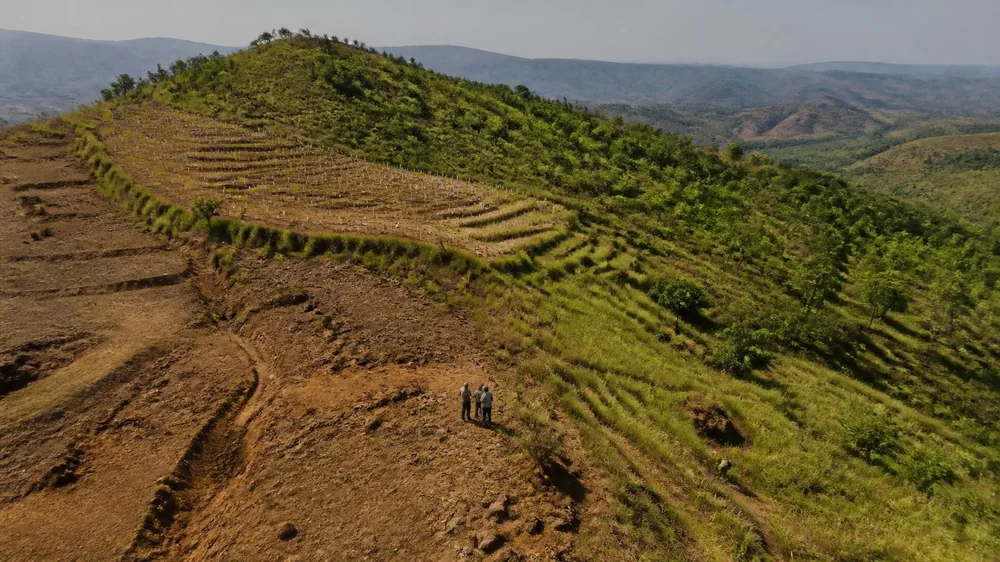
Deep roots, strong slope stabilisation
Vetiver grass is known for its dense, deep root systems that hold soil in place, making it a widely used solution for slope stabilisation, riverbank protection, and land restoration in erosion-prone areas. Unlike many grasses grown for erosion control, vetiver grows in tight, non-invasive clumps rather than spreading via runners, so it can be planted precisely where soil-holding is needed without overtaking surrounding land.
Deep Root System
Roots can grow several metres deep and dense, anchoring soil far more effectively than most surface-rooted grasses.
Slope & Bank Stabilisation
Commonly planted in contour rows on slopes, embankments, and riverbanks to prevent soil erosion and slow water runoff.
Low Maintenance
Once established, vetiver systems require relatively little ongoing maintenance compared to other erosion-control methods.
Planting patterns and typical applications
Contour Hedge Planting
Dense rows of vetiver planted along slope contours form a living barrier that slows runoff and traps sediment, reducing topsoil loss over successive monsoons.
Highway & Infrastructure Embankments
Used alongside other species in highway and infrastructure plantation projects to stabilise cut slopes and embankments prone to erosion.
Riverbank & Watershed Protection
Planted along riverbanks and watershed areas to reduce bank erosion and improve water retention in the surrounding soil.
Mine & Industrial Land Restoration
Used in land restoration projects on disturbed or degraded land where fast, reliable soil stabilisation is needed before other vegetation establishes.
Grassland & land development on the ground
Erosion Control Projects
Erosion control using vetiver grass systems as part of our grassland and land development work.
Grassland Development
Large-scale grassland development in Odisha and Gujarat, alongside fodder ecosystem development for livestock.
Common questions about vetiver
Where is vetiver typically used?
Vetiver is commonly used on slopes, riverbanks, highway embankments, and other erosion-prone sites where soil stabilisation is needed.
Can Kaamdhenu handle full erosion-control projects?
Yes, we provide vetiver-based erosion control and grassland development as part of our land development services across India. Contact us with your site details.
How is vetiver planted for erosion control?
Vetiver is typically planted in dense contour rows or hedges along slopes and embankments; the closely spaced plants form a continuous barrier that slows water runoff and binds topsoil.
How long does vetiver take to establish?
Vetiver typically establishes a functional root barrier within the first 6-12 months, with the deep root system continuing to strengthen over subsequent seasons.
Is vetiver an invasive plant?
No, common erosion-control vetiver varieties grow in dense clumps and do not spread invasively via runners or seed the way some grasses do, which is part of why it is favoured for controlled slope planting.